

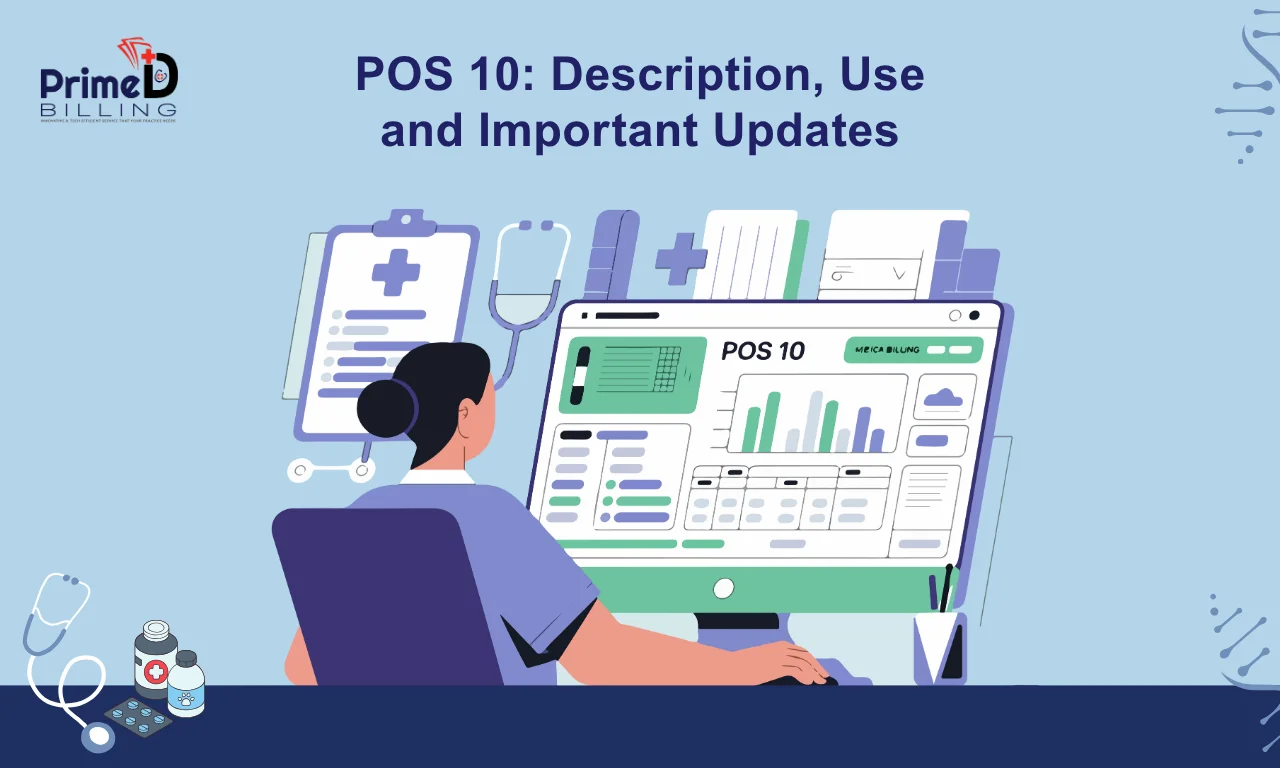
Place of service 10 in medical billing stands for telehealth services provided to a patient who is physically present at their own residence. POS 10 is only used when telehealth care is provided via real-time audio or video communication. The service is considered outpatient since it takes place other than the facility of a hospital.
Place of service 10 code significantly impacts the reimbursement rate of the claim because it comes under non-facility rate payment. The provider typically gets a higher physician reimbursement rate since the provider is bearing the practice expense costs. Incorrect use of POS code 10 leads to reduced reimbursement and claim denials in medical billing.
The CMS (Centre for Medicare and Medicaid services) has confirmed that the claims with POS code 10 are reimbursed at a higher non-facility rate since the provider bears the overhead cost of home-based care from January 01, 2024. Later in May 02, 2025, The CMS made further updates regarding the distinction between POS 10 and POS 02. According to this update, POS 10 is used for telehealth services provided in a patient’s home while POS 02 is used for telehealth services provided in other locations that are now billed separately.
10 POS in medical billing stands for telehealth services provided in a patient’s home. It is used for the telehealth services when the patient is physically located at their private residence at the time of medical care. The common method used to deliver telehealth services is real-time telecommunication technology which includes audio, video or both audio and video.
POS code 10 is associated with the outpatient telehealth services since the patient renders the services outside of a hospital facility. Place of service 10 is only used when the service qualifies as a telehealth service when the patient is at home. Accurate documentation supporting the patient’s physical location at the time of service ensures transparency and compliance.
The correct use of POS 10 ensures accurate reimbursement and transparency. Place of service code 10 when used accurately prevents billing errors and compliance risks while reducing claim denials, ensuring a smoother revenue cycle.

Place of service code 10 is usually used when the telehealth services are provided to the patients in their own home setting. The following are the key points determining when to use Place of service 10:
POS 10 is only used when the medical care is delivered via real-time audio or video communication. The telehealth services performed under payer-specific guidelines are approved for telehealth reimbursement under POS 10.
Place of service 10 applies when the patient is physically present in their own residence. The home setting of the patient qualifies as a non-facility location for POS 10 billing purposes.
Medical services that are billed with Place of service code 10 are:
• Behavioral and mental health therapeutic sessions
• Medication management consultations
• Telehealth Evaluation & Management (E/M) visits
• Chronic care management follow-ups
The latest CMS updates for POS 10 includes an effective distinction made on May 02,2024 between telehealth services provided in a patient’s home (POS 10) and the telehealth services provided in other locations (POS 02). The key updates for POS 10 by the Centre of Medicare and Medicaid Services includes:
1. CMS has confirmed that starting from January 01, 2024 the telehealth services that are billed with code 10 POS are paid with the non-facility rate since the patient is located at their home and not a facility such as a hospital.
2. Even though most of the commercial insurance agencies have adopted Place of service code 10, the policies of specific payers still need to be verified regarding POS 10. Compliance with the payer-specific guidelines ensure accurate reimbursement.
3. There is a permanent coverage of higher non-facility rate for specific audio-only telehealth services, when the patients are unable to use the video. This update was made effective from January 01, 2025.
Both Place of service codes 10 and 02 are used for the telehealth services. The only difference lies in the patient’s physical location at the time of medical care. Following are the key differences between POS 10 and POS 02.
| Place of Service 10 | Place of Service 02 | |
|---|---|---|
| Definition | Place of service code 10 refers to the telehealth services that take place when the patient is physically present inside their residence. | Telehealth services provided to the patients when they are located somewhere other than their home comes under Place of service code 02. |
| Setting Type | POS 10 comes under a non-facility (home) setting. | Place of service 02 involves usually a facility setting or even a non-facility setting other than the patient’s residence. |
| Reimbursement Structure | The claims submitted under POS 10 are typically paid at the non-facility rate. | The claims submitted as Place of service 02 are paid differently depending on the patient’s location at the time of service. |
| Billing Risks | If POS code 10 is used for services when the patient is not at home, increases the risks for audits and underpayment. | When POS 02 code is used for the telehealth care provided in a patient’s home, it results in claim denials. |

Place of service code 10 plays a crucial role in determining the reimbursement rates for telehealth services, which includes:
POS code 10 identifies the service location of telehealth services provided to the patients, which is the patient’s home. The distinction of service location is essential for clean claim submissions.
Reporting Place of Service code 22 for patients who were formally admitted in the hospital as inpatients results in incorrect reimbursements. Misclassification of inpatient services triggers audits as both the services follow different payment structures.
The Centers for Medicare and Medicaid Services (CMS) established the code POS 10 to differentiate the telehealth services provided in a patient’s home from those services that are provided in different locations. The location of a patient’s residence affects reimbursement rates which are comparatively different than the facility rates.
Accurate use of POS 10 code helps prevent claim denials in the RCM caused by incorrect reporting of locations. Prevention of claim denials also help reduce payment delays.
Using POS 10 code accurately reflects compliance with the payer-specific telehealth regulations. Complete and proper documentation is essential to protect the claims from audit and penalties.
The following are the required documentations for Place of Service 10 claim submissions:
Clear documentation stating the patient was physically in their home while the medical services were provided to them is essential for POS 10.
Documenting the location of healthcare providers while delivering telehealth services ensures transparency for audit purposes.
Documentations specifying the types of telecommunication technology used is essential in POS 10 billing. The telecommunication technology is either video, audio, or audio and video both in telehealth services.
It is important to document that the patient has consent to receive telehealth services at home. The patient consent consists of a signed consent form which is often a requirement from the insurance companies.
Providing the medical necessity documentation for the telehealth service rendered by the patient ensures transparency for using Place of service code 10. The medical necessity documentation often demonstrates that the medical care meets the patient’s healthcare needs.
Detailed documentation of clinical findings, plans of care, and medical assessment in telehealth services is necessary to ensure the claim remains audit-ready.
Some insurance payers require the screenshots and connection logs to verify the patient’s home location. Therefore, it is essential to ensure that POS 10 claims meet the payer-specific documentation standards.
Some of the best practices for using POS 10 includes:
Frequently Asked Questions
The most common modifier used with POS 10 code is Modifier 95, which indicates that a real-time audio and video communication was used to deliver telehealth care. Other common modifiers used with POS 10 include Modifier GT (telehealth services), FQ (audio-only) and FR (video and audio telehealth).
| Place of Service 10 | Place of Service 11 | |
|---|---|---|
| Definition | Place of service 10 is used in medical billing when the telehealth services are provided to the patients in their own home. | Place of service code 11 is used when the medical care is provided to the patients in the physician’s office. |
| Visit Type | POS 10 refers to virtual medical care or telehealth. | The in-person medical care when the patient visits the doctor comes under POS code 11. |
| Reimbursement Structure | POS 10 is typically reimbursed at the non-facility rate, depending on the payer-specific guidelines. | POS 11 is always reimbursed at the non-facility rate since the medical care takes place at the physician’s office. |
Yes, POS 10 can be used for audio-only telehealth services. Accurate documentation supporting the audio mode of telehealth communication helps meet the payer-specific policies for using Place of service code 10.
No, Place of service 10 does not apply to all insurance payers. Even though it is widely recognized, it does not automatically apply to every insurer.
Yes, POS 10 and 22 are reimbursed differently because they represent different care settings. POS 10 is used for telehealth services whereas, POS 22 represents the services provided in a hospital outpatient department.
No, POS 10 and POS 21 cannot be billed together on the same medical claim. Both the codes represent different service locations as POS 10 is used for telehealth service and POS 21 for the patient admitted as an inpatient in a hospital.
Centers for Medicare & Medicaid Services. (2026). Place of Service Code Set. CMS. https://www.cms.gov/medicare/coding-billing/place-of-service-codes/code-sets?utm_source=chatgpt.com
Centers for Medicare & Medicaid Services. (2024). Transmittal R12671CP: Billing and payment for telehealth services with Place of Service (POS) 10. CMS. https://www.cms.gov/medicare/regulations-guidance/transmittals/2024-transmittals/r12671cp?utm_source=chatgpt.com
Join hundreds of healthcare providers who have transformed their practice with our medical billing services in New York.
Let our medical billing experts review your revenue cycle and uncover hidden revenue opportunities.
Let our medical billing experts review your revenue cycle and uncover hidden revenue opportunities.

 (347) 650-2656
 (347) 650-2656
 info@primedocbilling.com


